

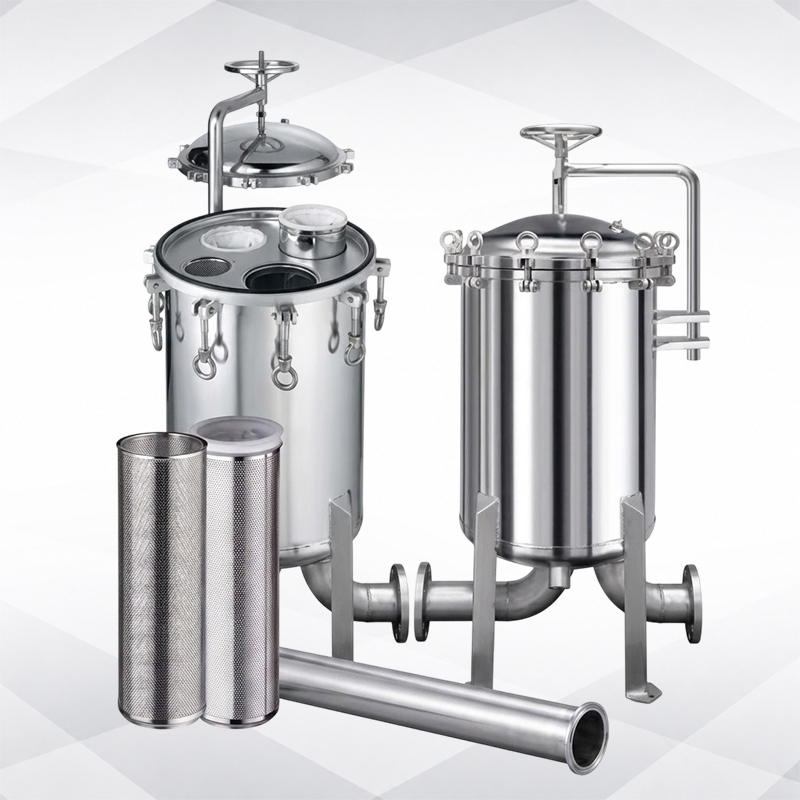
Synthetic Filter Media is an engineered filtration material used for separating suspended solids, particles and contaminants from industrial process streams. Depending on the application, synthetic media can be manufactured from polymers such as polyester, polypropylene or nylon and configured to provide the required balance of filtration efficiency, chemical compatibility, mechanical strength, flow and service life.
Aris Filtration manufactures and exports industrial filtration solutions from Gujarat, India, serving demanding applications across water treatment, chemicals, refineries, mining, textiles, oil & gas, cement, power and other process industries.
What Is Synthetic Filter Media?
Synthetic Filter Media is a filtration material manufactured from synthetic polymer fibres or filaments instead of naturally occurring fibres. It is used as a filtration layer or filter element to separate solids from liquids, gases or process streams.
Common synthetic filtration materials include:
| Synthetic Material | Typical Characteristics |
|---|---|
| Polypropylene (PP) | Useful where chemical resistance and low moisture absorption are important |
| Polyester (PET) | Known for mechanical strength and suitability for various industrial filtration applications |
| Nylon / Polyamide | Used where strength and compatibility with particular process conditions are required |
| Specialty Polymers | Selected for applications requiring specific chemical or thermal performance |
The exact material and construction should be selected according to the process fluid, contaminant characteristics, temperature, pressure, flow rate and required filtration performance.
How Does Synthetic Filter Media Work?
Synthetic Filter Media works by allowing the process fluid to pass through a controlled filtration structure while retaining unwanted particles or solids.
The filtration process generally involves:
- Process-fluid entry: The contaminated liquid or gas reaches the filter media.
- Particle separation: Suspended particles encounter the filtration structure.
- Particle retention: Contaminants are retained by the media according to its construction and filtration characteristics.
- Clean-fluid passage: The filtered process stream continues downstream.
- Media maintenance or replacement: Depending on the filter design, the media may be disposable, washable, reusable or incorporated into a replaceable filtration element.
Synthetic media may be supplied or converted into different filtration configurations, including woven, non-woven, felt, pleated or other application-specific structures. The choice depends on the separation process and equipment design.
What Are the Advantages of Synthetic Filter Media?
Synthetic filtration media are selected because their polymer composition and physical construction can be matched to specific industrial filtration requirements.
Key advantages include
- Controlled filtration performance for industrial separation applications
- Material selection flexibility based on chemical and process conditions
- Good mechanical strength for demanding filtration operations
- Chemical compatibility options through appropriate polymer selection
- Consistent media construction for repeatable filtration
- Suitable for liquid and air filtration applications, depending on media design
- Available in different constructions such as woven and non-woven media
- Application-specific customization based on equipment and process requirements
For example, polypropylene, polyester and nylon filter fabrics are widely used in industrial filtration, but their suitability differs according to chemical environment, temperature, pressure and mechanical requirements.
Which Industries Use Synthetic Filter Media?
Synthetic Filter Media can be considered for filtration processes across a wide range of industries where controlled solid-liquid or particle separation is required.
Water Treatment
Used in industrial water, process-water and wastewater filtration applications for removing suspended solids and protecting downstream equipment.
Refineries and Oil & Gas
Synthetic filtration media can be incorporated into filtration systems used for process fluids, hydrocarbons and equipment-protection applications.
Mining and Minerals
Suitable media selection can support slurry and process-water filtration where solids loading and mechanical durability are important.
Pulp & Paper
Used in process filtration applications where separation of suspended particles and contaminants is required.
Chemicals, Dyes & Intermediates
Synthetic media can be selected according to the chemical characteristics of the process stream and required filtration stage.
Textiles
Used for filtration of process water, dyes, chemicals and other textile-processing fluids.
Power Plants
Applications may include filtration of cooling water, process fluids and other streams where contaminant control is required.
Petrochemicals, Paints & Inks
Synthetic filtration media can support particulate removal, product clarification and protection of downstream equipment.
Edible Oils, Sugar & Food-Related Processing
Appropriately selected filtration media can be used for liquid clarification and separation processes.
Automobiles, Fertilizers, Ceramics, Bio-Pharma, Cement, Aeronautics, Defence & Marine
Synthetic media can also be evaluated for application-specific filtration requirements where material compatibility, filtration performance and mechanical properties need to be matched to the process.
How Do You Select the Right Synthetic Filter Media?
Selecting Synthetic Filter Media should be based on the complete filtration application rather than the media material alone.
Consider these parameters:
| Selection Parameter | Why It Matters |
|---|---|
| Process Fluid | Determines material compatibility |
| Particle Size | Helps determine the required filtration characteristics |
| Solid Concentration | Influences dirt-holding and service requirements |
| Flow Rate | Helps determine required filtration area |
| Operating Temperature | Limits suitable media materials |
| Operating Pressure | Influences mechanical requirements |
| pH and Chemical Composition | Important for polymer compatibility |
| Filter Equipment | Media must suit the existing filtration system |
| Cleaning Method | Determines whether reusable media is appropriate |
| Required Filtrate Quality | Helps establish the filtration target |
The right synthetic filter media is selected by matching the material and media construction to the complete process condition, not simply by choosing a particular polymer.
Why Choose Aris Filtration for Synthetic Filter Media?
Aris Filtration is a manufacturer and exporter of Synthetic Filter Media based in Ahmedabad, Gujarat, India. The company states that its expertise covers macro- and micro-filtration technology for industrial air, gas and liquid applications. Its published portfolio includes cartridge filter housings, bag filter housings, wound and pleated cartridges, liquid filter bags, sintered products, air filters and other filtration products.
The company's published information also highlights application-focused engineering and in-house innovation, with filtration solutions developed around customer requirements.
This makes application evaluation important when specifying Synthetic Filter Media. Buyers can provide their process conditions and existing filter details so the appropriate media configuration can be evaluated rather than selecting a material based only on a generic specification.
Frequently Asked Questions
(1)What is Synthetic Filter Media used for?
Synthetic Filter Media is used to separate suspended solids, particles and contaminants from industrial liquids, gases or process streams. Its applications vary according to the media material and filtration construction.
(2)What materials are used in Synthetic Filter Media?
Common synthetic materials include polypropylene, polyester and nylon. Specialty polymers may also be used where particular chemical, temperature or performance requirements exist.
(3)Is Synthetic Filter Media suitable for chemical filtration?
Yes, synthetic media can be used in chemical filtration when the selected polymer and media construction are compatible with the process fluid, concentration, temperature and operating conditions.
(4)How do I select Synthetic Filter Media for my application?
Selection should consider the process fluid, particle characteristics, solids concentration, flow rate, pressure, temperature, pH, chemical compatibility, equipment configuration and required filtrate quality.
(5)Can Synthetic Filter Media be customized?
Application-specific filtration media can be configured according to the filtration equipment and process requirements. The exact construction, dimensions and material should be confirmed with the manufacturer before selection.
(6)Which industries use Synthetic Filter Media?
Synthetic filtration media are used across water treatment, refineries, mining, pulp & paper, chemicals, textiles, power plants, oil & gas, petrochemicals, paints, inks, edible oils, automobiles, fertilizers, bio-pharma, ceramics, cement, sugar, defence and marine applications.
Need Synthetic Filter Media for Your Industrial Application?
If you are looking for a Synthetic Filter Media Manufacturer and Exporter in Gujarat, India, Aris Filtration can evaluate your filtration requirement and help identify a suitable media configuration.
Share the process fluid, filtration application, flow rate, operating temperature and pressure, existing filter details, particle/solid characteristics and required filtration performance with the Aris Filtration team.