
Conical Strainer
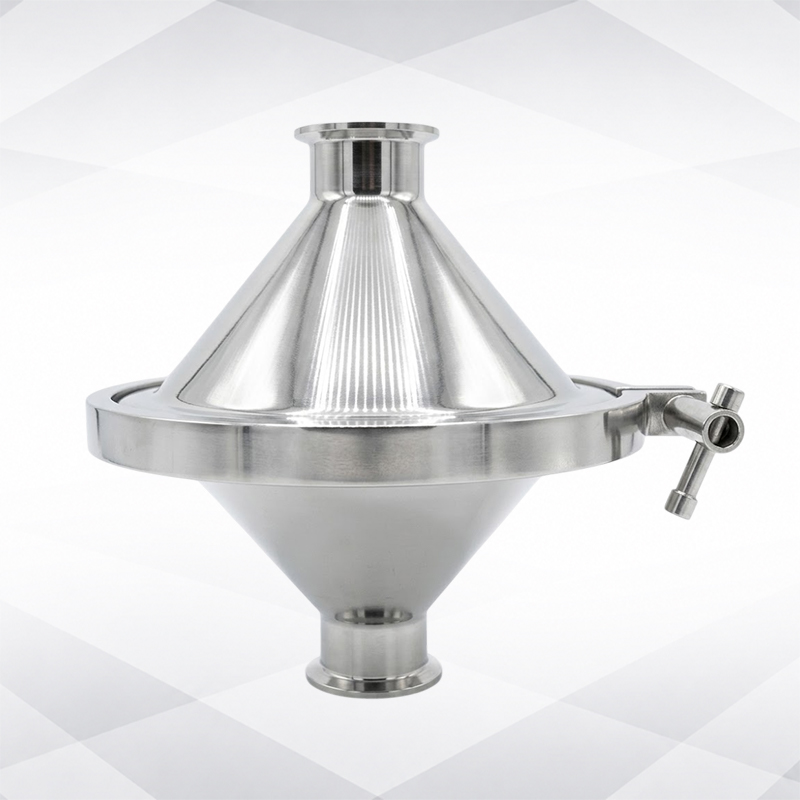
A Conical Strainer is a pipeline filtration device designed to remove solid particles, debris, scale, rust, and other contaminants from process fluids before they reach sensitive downstream equipment. Also known as a temporary strainer or cone strainer, it is commonly used during plant commissioning, startup, flushing, maintenance, and selected process applications to protect pumps, valves, flow meters, heat exchangers, and other equipment.
What Is a Conical Strainer and How Does It Work?
A Conical Strainer is a cone-shaped filtration element installed in a pipeline to intercept unwanted solid particles while allowing the process fluid to continue flowing.
The basic working principle is straightforward:
- Contaminated liquid or gas enters the pipeline.
- The process stream passes through the conical screening element.
- Solid particles larger than the selected opening are retained by the strainer.
- The filtered process stream continues toward downstream equipment.
- The collected debris can be removed during scheduled inspection or cleaning.
Conical strainers are particularly useful where pipelines need protection from welding slag, rust, scale, construction debris and other foreign particles, especially during commissioning and startup.
The required filtration area and pressure-drop allowance should be considered when selecting a strainer for a specific process. Strainer selection can also depend on flow rate, fluid properties, operating temperature, viscosity and required filtration level.
Where Are Conical Strainers Used?
Conical strainers can be incorporated into industrial piping and process systems where protection against particulate contamination is required.
Typical Applications Include:
| Industry | Typical Filtration Requirement |
|---|---|
| Water Treatment | Protection of pumps and process equipment |
| Refineries | Process-fluid and equipment protection |
| Mining | Process water and slurry-related filtration |
| Pulp & Paper | Process-fluid protection |
| Chemicals | Removal of unwanted solid contaminants |
| Textiles | Process liquid and chemical filtration |
| Power Plants | Protection of pumps, valves and process equipment |
| Dye & Intermediates | Process-fluid particle removal |
| Oil & Gas | Pipeline and equipment protection |
| Edible Oils | Process-fluid filtration |
| Automobiles | Coolant and process-fluid protection |
| Petrochemicals | Process-line protection |
| Paints & Inks | Process-fluid particle removal |
| Aeronautics | Process and equipment protection |
| Cement | Industrial process-fluid protection |
| Fertilizers | Process-line filtration |
| Bio-Pharma | Process-fluid protection |
| Ceramics | Process-fluid filtration |
| Sugar | Syrup and process applications |
| Defence & Marine | Equipment and process-line protection |
Aris Filtration already serves industrial filtration requirements across sectors including oil & gas, textiles, mining and minerals, cement and water treatment, while its broader filtration portfolio includes basket strainers, duplex systems and Y/T-type strainers.
Project Gallery


What Problems Does a Conical Strainer Solve?
Industrial pipelines can carry unwanted particles introduced during fabrication, installation, maintenance, corrosion or process operations. These contaminants can enter pumps, control valves, meters, heat exchangers and other downstream equipment.
A properly selected conical strainer provides a physical barrier against these contaminants.
Key benefits include:
- Downstream equipment protection: Helps prevent larger contaminants from reaching sensitive components.
- Debris removal: Captures particles such as scale, rust, welding debris and foreign matter.
- Simple construction: A conical screening element has no moving filtration mechanism.
- Reusable design potential: Depending on construction and application, the strainer element can be removed and cleaned.
- Application flexibility: The filtration element can be selected according to the process requirement.
- Commissioning protection: Particularly useful for removing construction debris during initial plant operation.
A conical strainer should be selected based on the actual process conditions rather than by pipe size alone.
What Are the Main Components of a Conical Strainer?
The construction of a conical strainer generally consists of a conical filtration element, supporting structure and connection arrangement suitable for installation in the pipeline.
The important design considerations include:
Filtration Element
The filtration element may use perforated material, wire mesh, or a combination of supporting and filtering media, depending on the required particle retention and mechanical strength.
Material of Construction
The material should be compatible with the process fluid, operating temperature, pressure and corrosion conditions. Stainless steel and carbon steel are among the materials commonly used for industrial conical strainers, while special materials may be selected for demanding chemical services.
Flange and Pipeline Connection
The conical strainer must match the pipeline's connection arrangement, flange dimensions and pressure requirements. Correct dimensional matching is essential for installation and reliable operation.
Open Area
The available filtration area and open area influence the flow characteristics and pressure drop. These parameters should be determined from the process flow requirements and allowable pressure loss.
How Do You Select the Right Conical Strainer?
Selecting a conical strainer requires more than choosing a standard size. The filtration design should correspond to the actual process conditions.
Consider these parameters before ordering:
| Selection Parameter | Why It Matters |
|---|---|
| Pipe Size | Determines dimensional and connection requirements |
| Flow Rate | Helps establish required filtration area |
| Fluid Type | Determines material compatibility |
| Operating Pressure | Influences mechanical design |
| Operating Temperature | Affects material and sealing selection |
| Particle Size | Determines filtration opening |
| Solids Loading | Influences cleaning frequency and element design |
| Viscosity | Affects flow resistance |
| Flange Standard | Ensures proper pipeline installation |
| Installation Location | Determines accessibility and maintenance requirements |
The correct conical strainer is selected by matching filtration performance, mechanical strength, process compatibility and allowable pressure drop to the application.
For engineered applications, process data and pipeline drawings should be reviewed before finalizing the design.
What Is the Difference Between a Conical Strainer and Other Strainers?
Conical strainers form one part of a broader industrial strainer family.
| Strainer Type | Typical Use |
|---|---|
| Conical Strainer | Commissioning, startup and selected pipeline protection applications |
| Y-Type Strainer | Compact inline filtration where solids loading is relatively limited |
| T-Type Strainer | Pipeline filtration where a T-shaped configuration is suitable |
| Basket Strainer | Applications requiring a removable, cleanable basket element |
| Duplex Strainer | Applications requiring filtration with continued operation during cleaning |
Aris Filtration's published filtration portfolio includes Basket Housing & Strainers, Duplex Filter Systems and Y-Type & T-Type Strainers, providing different approaches to industrial particulate filtration.
Why Choose Aris Filtration for Conical Strainers?
Aris Filtration is a manufacturer and exporter of Conical Strainers based in Ahmedabad, Gujarat, India. The company works across macro- and micro-filtration applications for air, gas and liquid filtration and serves Indian as well as international industrial markets.
Aris Filtration's published product range includes filter housings, basket strainers, duplex filter systems, Y-type and T-type strainers, filter cartridges, filter bags, sintered products, air filters, gas filter elements and other industrial filtration products.
Its broader approach is application-focused: Aris states that its designs are developed from scratch with in-house innovation and international technical exposure.
Frequently Asked Questions
(1)What is a Conical Strainer?
A Conical Strainer is a cone-shaped pipeline filtration device used to capture solid particles and debris from a process stream before they reach downstream equipment.
(2)Is a Conical Strainer also called a Temporary Strainer?
Yes. Conical strainers are commonly referred to as temporary strainers or cone strainers, particularly when they are installed during pipeline commissioning, startup or flushing operations.
(3)What contaminants can a Conical Strainer remove?
Depending on the selected filtration element, a conical strainer can retain contaminants such as welding slag, rust, scale, construction debris and other solid particles that are larger than the selected filtration opening.
(4)Where are Conical Strainers commonly installed?
They are commonly installed in industrial pipeline systems where downstream pumps, valves, meters, heat exchangers or other equipment require protection from solid contamination.
(5)Can Conical Strainers be customized?
Industrial conical strainers can be engineered according to application-specific requirements such as pipeline dimensions, flange arrangement, filtration media, material and operating conditions. The exact configuration should be confirmed from the customer's process and piping data.
(6)How do I select a Conical Strainer?
Start with the pipe size, flow rate, fluid, operating pressure, temperature, particle size, solids loading, allowable pressure drop and connection standard. These parameters help determine the appropriate filtration area, material and configuration.
Looking for a Conical Strainer Manufacturer in Gujarat, India?
Aris Filtration provides industrial filtration products from its manufacturing base in Ahmedabad, Gujarat, India, serving process industries in India and international markets. The company operates a corporate office and factory in Ahmedabad and offers application-oriented filtration solutions across liquid, gas and air filtration requirements.
If you are looking for a Conical Strainer manufacturer, supplier or exporter in Gujarat, India, share your pipeline size, process fluid, flow rate, operating pressure and temperature, filtration requirement and connection details with Aris Filtration for application-specific guidance.